


When an ad campaign gets rejected, the first reaction is usually to fix the ad.
The headline gets rewritten. The creative changes. The copy becomes softer.
But quite often the ad isn’t the real issue.
The problem sits on the landing page.
Both Facebook and Google evaluate the full experience after the click. If the page raises concerns — unrealistic claims, unclear offers, missing business information — the ad can be rejected even when the creative itself looks completely harmless.
After reviewing a large number of rejected campaigns, certain patterns show up again and again.
The product is often legitimate. The offer may even convert well.
But something about the landing page makes the funnel look unreliable.
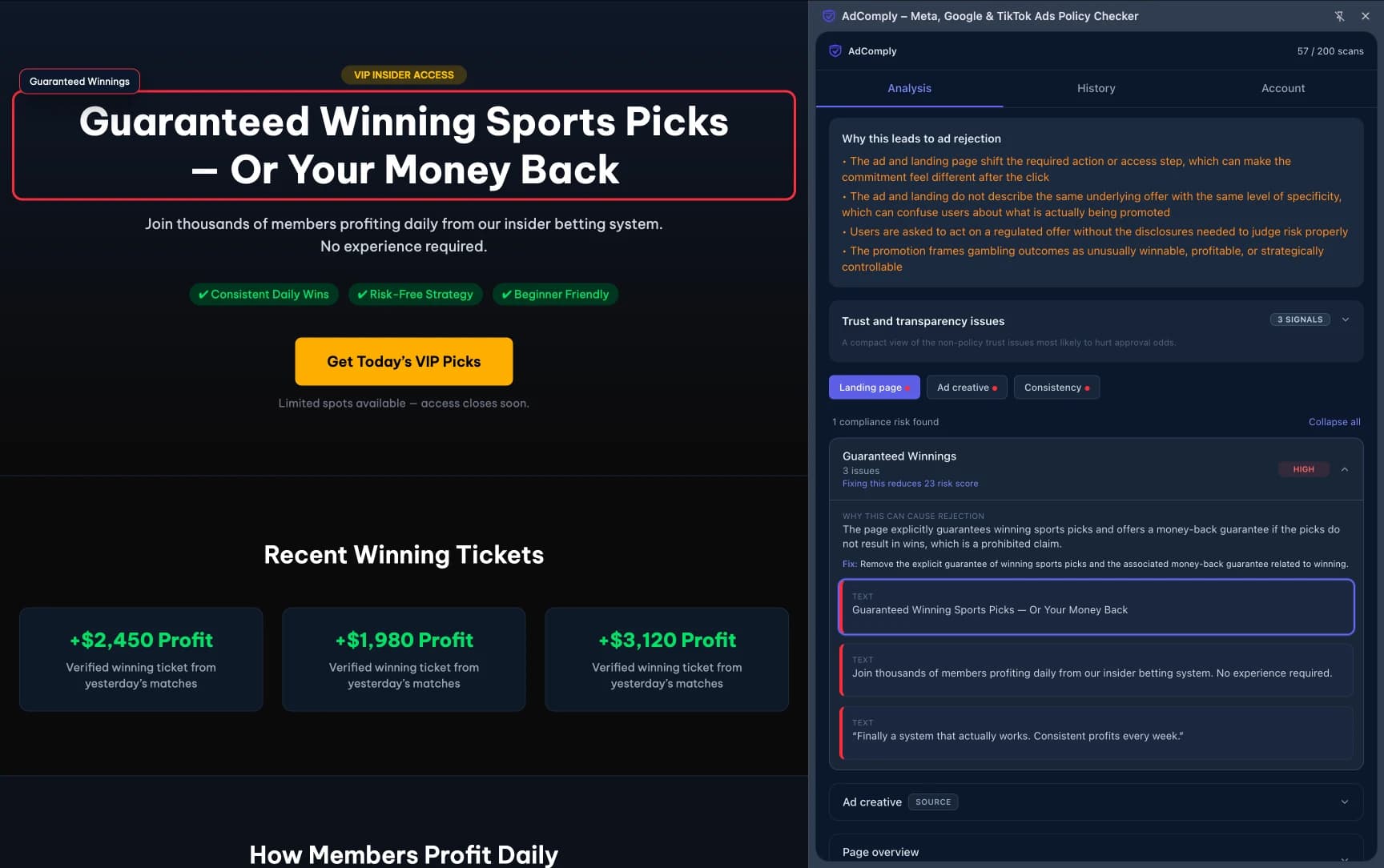
1. Promises that sound too certain
Absolute claims tend to attract attention quickly.
Phrases like “guaranteed results”, “automatic fat burning”, or “earn money effortlessly” make the outcome sound certain.
That’s difficult for any platform to verify, which is why these pages often get flagged.
2. Before-and-after transformations
Transformation imagery appears in rejected funnels surprisingly often.
A landing page might show dramatic weight loss, cosmetic improvements, or extreme fitness results.
Even when the text avoids guarantees, the visual alone can imply a predictable outcome.
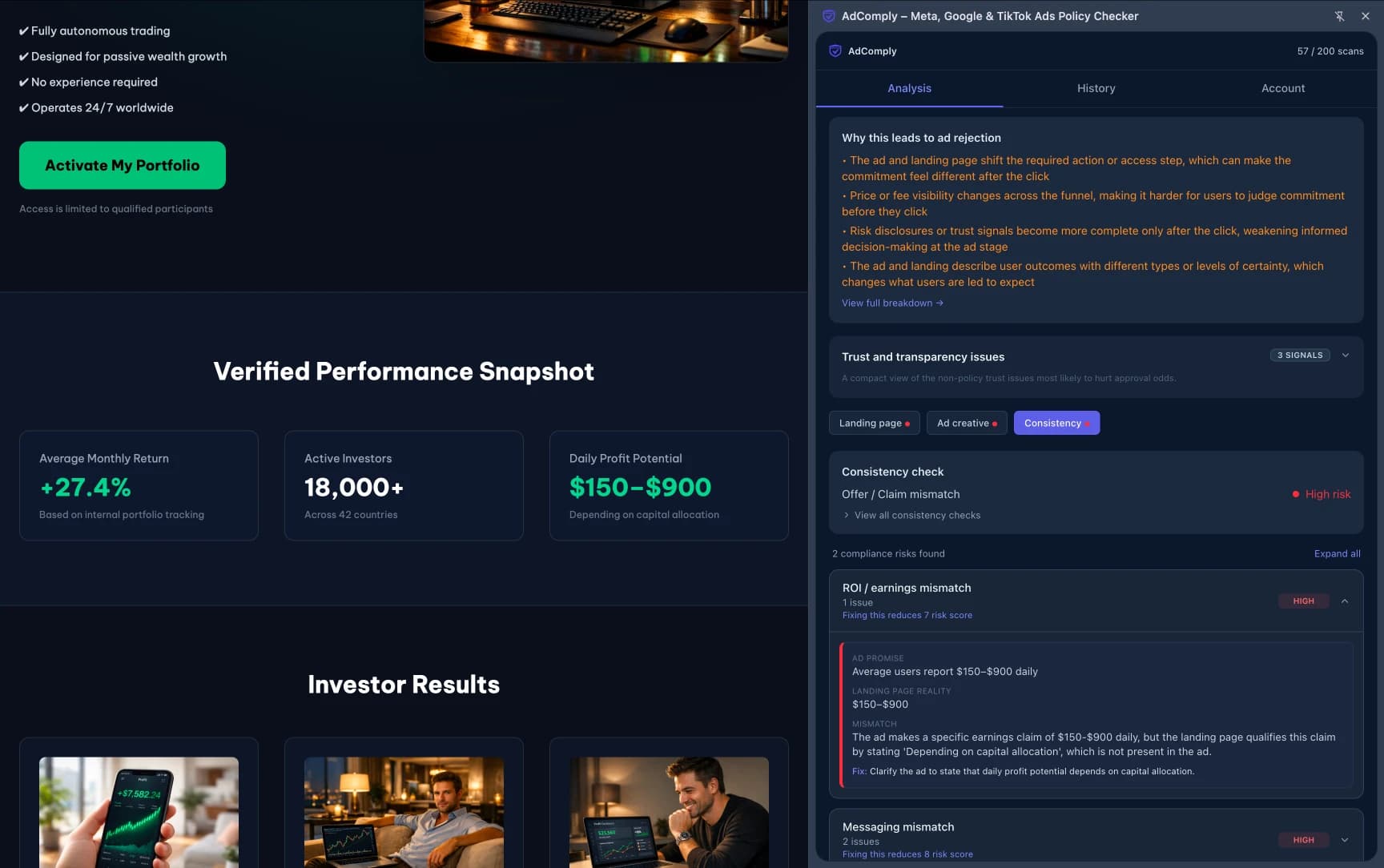
3. Earnings claims without context
Financial offers are reviewed more aggressively than most categories.
Landing pages mentioning daily profits, automated trading, or passive income systems tend to attract closer scrutiny.
Without context the numbers can easily look exaggerated.
4. The ad and landing page tell different stories
This happens more often than people expect.
An ad might look educational or informational, but after the click the landing page immediately turns into a heavy sales pitch.
That shift can make the funnel feel misleading.
5. Pages that don’t look like real businesses
Another common issue is simply missing information.
The landing page sells a product but provides almost nothing about the company behind it.
No contact page. No privacy policy. Sometimes not even a company name.
6. Urgency everywhere
Urgency is normal in marketing.
The issue appears when the entire page relies on pressure tactics — multiple countdown timers, repeated “last chance” warnings, or aggressive scarcity messaging.
7. Health language that sounds medical
Health-related offers face stricter moderation.
Statements about curing conditions, reversing diseases, or producing medical outcomes often require supporting evidence or regulatory approval.
Find Rejection Risks Before You Submit
Scan your ad funnel for policy risks, risky claims, landing-page issues, and ad-to-page mismatches before review.
No signup required • instant results • 5 free scans included
8. Sensational wording
Some phrases appear so frequently in misleading ads that they attract immediate scrutiny.
Words like “miracle”, “secret system”, or “instant breakthrough” fall into this category.
9. Pricing that appears too late
If the real price only appears several steps into the funnel, the page may be treated as deceptive.
10. Missing disclosures
This appears frequently in finance, crypto, supplements, and gambling offers.
Landing pages often explain the product but never mention the legal context — no disclaimers, no risk notices, sometimes not even basic terms.
11. Redirect chains
Some funnels send visitors through multiple redirects before reaching the final page.
This behavior is sometimes associated with deceptive funnels, which is why platforms review it carefully.
Before you launch: A quick scan can show the issues that often lead to ad rejection before you send the campaign for review.
Scan your funnel now →12. Too many pop-ups
Pop-ups themselves aren’t unusual.
The problem appears when the page becomes a sequence of interruptions — email gates, overlays, and exit pop-ups stacked together.
13. Testimonials promising extreme results
Testimonials can still trigger policy issues.
If a testimonial claims dramatic income or life-changing results, the platform may interpret it as the page making that promise.
AdComply flags not just your main copy, but also scans testimonials for high-risk income claims.
14. Brand confusion
Sometimes the ad promotes one brand while the landing page suddenly introduces another.
This often happens with affiliate funnels.
15. Pages that keep changing
Unstable landing pages can quietly cause problems.
Advertisers often tweak funnels while campaigns are running — switching domains, testing different page versions, or redirecting traffic through new URLs.
From a marketing perspective that’s normal experimentation.
But if the destination keeps changing, the funnel can start to look unreliable.
Real examples of landing pages that trigger rejections
Some of the most common triggers we see during compliance scans include:
weight loss pages promising rapid fat loss
trading pages advertising daily profits
supplement pages implying medical treatment
funnels where the ad and landing page messaging don’t match
Common trigger phrases moderation systems watch for
Certain phrases appear so frequently in policy violations that platforms treat them cautiously.
“guaranteed results”
“lose weight fast”
“earn money automatically”
“secret formula”
“miracle solution”
“instant results”
Using these phrases doesn’t automatically cause a rejection, but they significantly increase the likelihood of a review.
Landing page compliance checklist
Before launching an ad campaign, it’s worth reviewing a few basic elements of the funnel.
Are the claims realistic and verifiable?
Does the ad match the landing page message?
Is pricing clear?
Does the page include privacy policy and contact information?
Are there proper disclosures for regulated industries?
Even small adjustments to wording or structure can significantly reduce the risk of rejection.
The practical takeaway
Landing page rejections rarely happen because of one obvious violation.
More often several small signals combine to make the funnel look unreliable.
Reviewing the page before launching campaigns can prevent wasted ad spend and repeated account reviews.