


Most advertisers approach Google Ads policy violations like isolated mistakes.
A restricted phrase. A misleading sentence. A missing disclaimer.
That framing sounds logical at first.
But after enough rejected campaigns, it stops explaining what’s actually happening.
I’ve had Google Ads disapproved where the copy looked cleaner than competing ads already running at scale.
No extreme promises. No obvious deception. No “black hat” structure.
And still, the campaigns struggled to stay approved consistently.
That’s usually when the real pattern starts becoming visible.
Because Google Ads policy enforcement is not just about detecting forbidden wording.
It’s about evaluating whether the overall advertising experience feels reliable, predictable, and trustworthy.
Google Ads Policies Are Built Around User Trust
This is the foundation most advertisers underestimate.
Google’s system is not only checking whether something technically violates policy.
It’s constantly evaluating trust probability.
That means the platform looks at:
landing page structure
claim consistency
behavioral flow
destination transparency
historical signals
I’ve seen pages with technically careful wording still become unstable because the surrounding experience weakened trust.
The issue wasn’t always the claim itself.
Sometimes it was the structure around the claim.
That distinction becomes extremely important inside Google Ads.
Google Evaluates The Full Post-Click Experience
One of the biggest misconceptions is that policy enforcement stops at the ad.
It doesn’t.
The landing page often becomes the real source of instability.
I’ve seen campaigns where:
the ad looked informational
the landing page became highly aggressive
key conditions appeared too late
trust signals felt incomplete
Nothing individually looked catastrophic.
Together, the experience became harder for the system to trust.
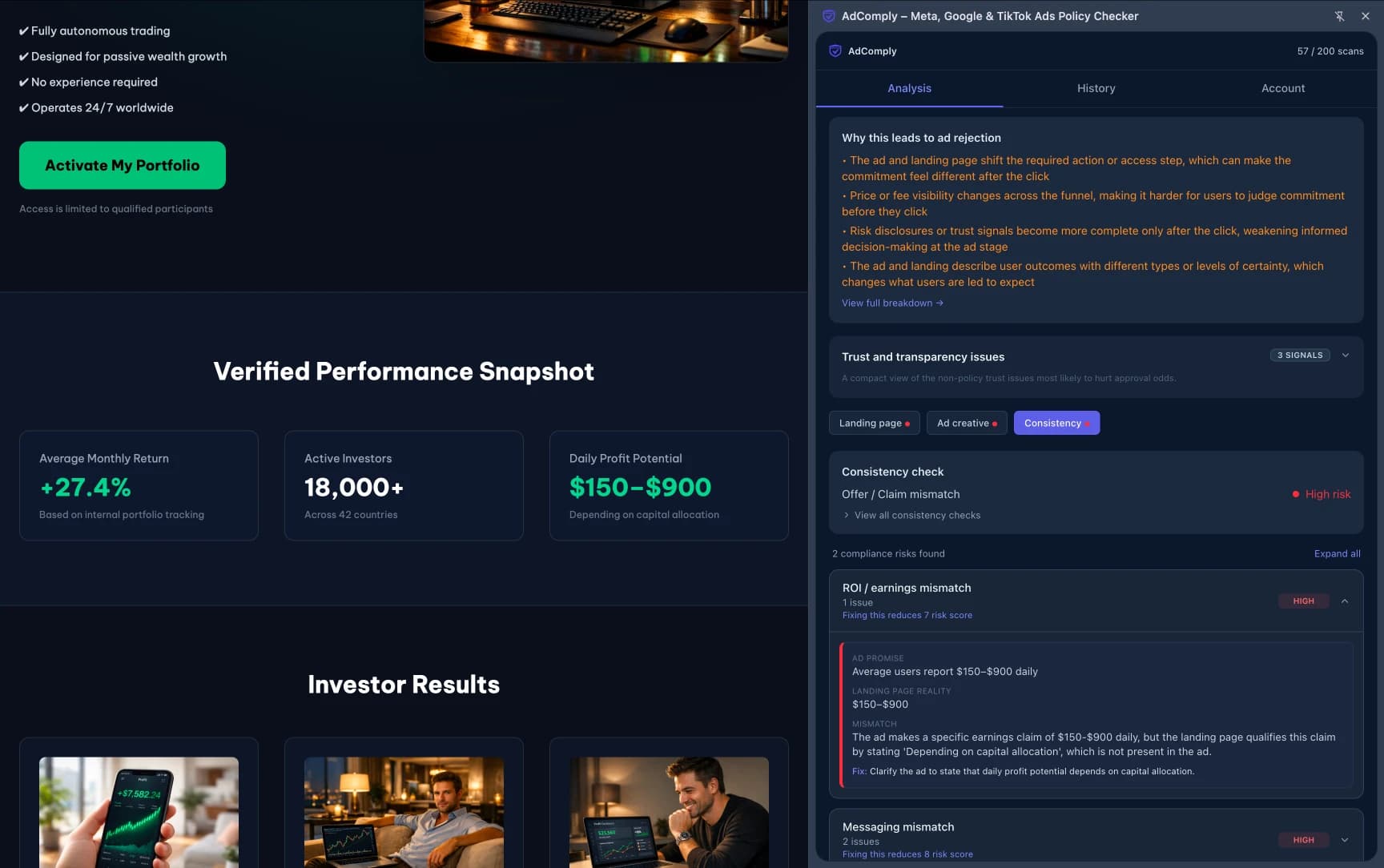
This becomes especially sensitive in categories like finance, health, employment, and lead generation where Google expects stronger structural clarity.
Misleading Content Is Often Structural, Not Literal
This is where many advertisers misread Google policy entirely.
They assume misleading content means explicit deception.
In practice, Google often reacts to implication patterns.
I’ve seen landing pages become unstable because:
critical details were delayed
visuals implied unrealistic outcomes
claims escalated deeper into the funnel
the CTA pressure intensified too aggressively
None of those elements necessarily contained a direct false statement.
But together, they changed how the experience was interpreted.
That’s why some pages feel “technically compliant” while still triggering disapprovals repeatedly.
Google Is Extremely Sensitive To Transparency Gaps
This becomes obvious after reviewing enough unstable funnels.
Google strongly prefers experiences that explain themselves early.
I’ve had campaigns improve approval stability simply by:
moving pricing information higher
clarifying eligibility earlier
reducing vague CTA wording
making the offer easier to understand immediately
Same offer.
Same conversion flow.
Different transparency timing.
That alone changed how the funnel was classified.
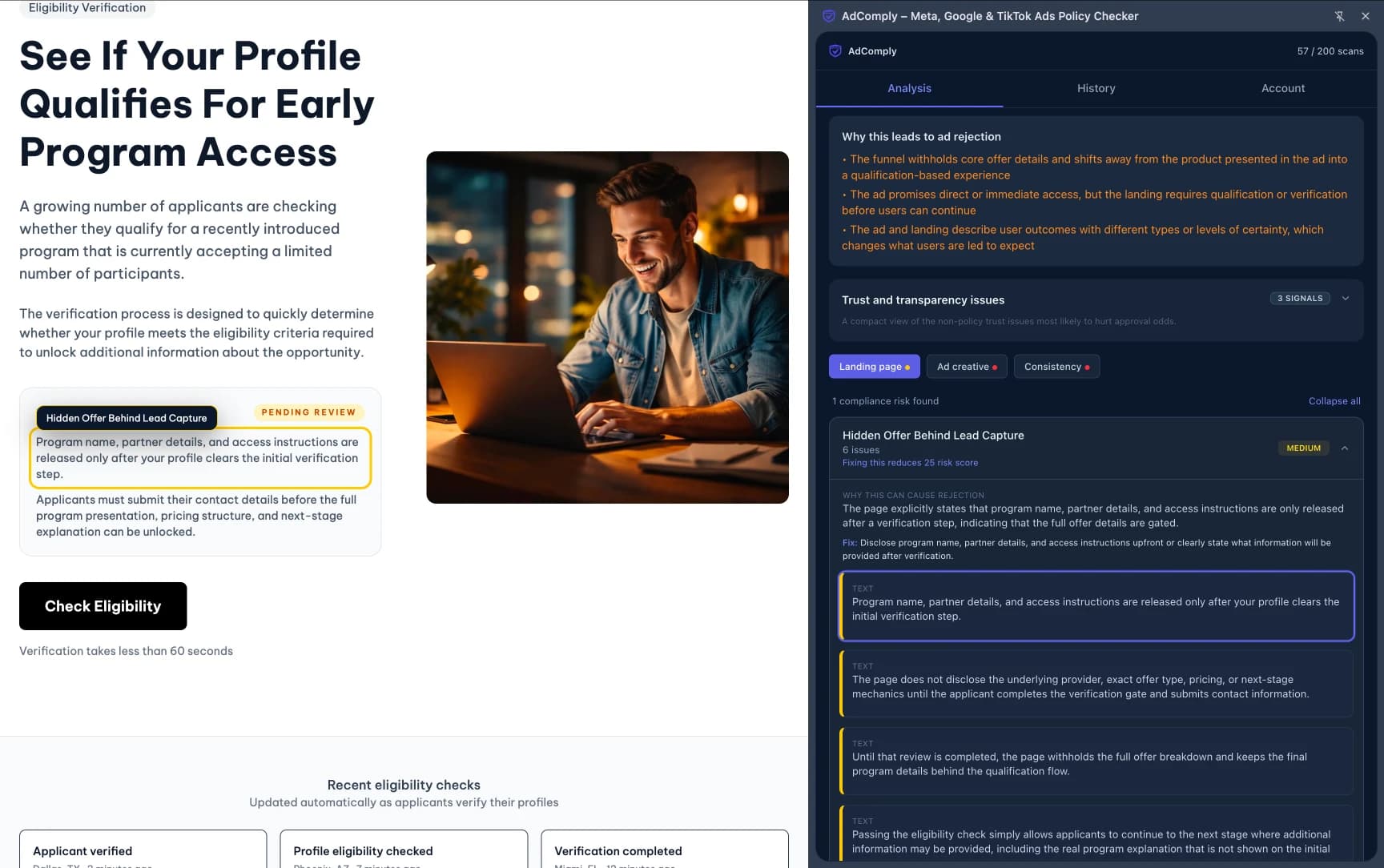
This is one reason Google Ads often feels stricter than advertisers expect.
The system heavily prioritizes clarity and predictability.
Behavioral UX Patterns Can Trigger Violations
This part gets overlooked constantly.
Google does not only evaluate text.
It evaluates interaction behavior.
I’ve seen funnels destabilize approvals because the UX itself became too forceful:
stacked pop-ups interrupting navigation
blocking exit behavior
fake urgency mechanisms
constant modal interruptions
forcing interaction before showing information
From a conversion perspective, these tactics are often meant to keep momentum high.
From Google’s perspective, they can look manipulative.
That’s where the funnel stops feeling optimized and starts feeling coercive.
Google Ads Policies Also Affect Performance Economics
This is something many advertisers only discover after spending significant budget.
Policy instability doesn’t just create rejection problems.
It can quietly increase advertising costs too.
I’ve seen unstable landing page structures correlate with:
lower Quality Score
higher CPC volatility
reduced delivery consistency
weaker landing page experience ratings
Because Google’s trust systems influence both compliance and auction confidence.
The harder your funnel is to trust, the more expensive traffic often becomes over time.
Historical Signals Influence Future Review Outcomes
This is where things become frustrating for advertisers.
I’ve seen advertisers significantly clean up funnels and still experience unstable approvals weeks later.
Not because the current version obviously violated policy.
Because the broader behavioral pattern had already accumulated risk.
This is also why superficial “cleanup” changes often fail.
Find Rejection Risks Before You Submit
Scan your ad funnel for policy risks, risky claims, landing-page issues, and ad-to-page mismatches before review.
No signup required • instant results • 5 free scans included
The system is not only evaluating the current snapshot.
It’s evaluating whether the overall trust pattern actually changed.
I’ve seen funnels continue triggering review instability because the structural behavior still resembled the same underlying risk profile even after visible edits.
At that point, you’re not just fixing a landing page.
You’re trying to rebuild platform trust.
Why Similar Ads Can Receive Completely Different Outcomes
This confuses advertisers constantly.
You see aggressive competitors running ads successfully while your cleaner version gets rejected.
That usually happens because Google is not evaluating isolated creatives.
It’s evaluating the broader environment around them:
landing page behavior
trust structure
historical account quality
destination consistency
behavioral risk patterns
Two ads can look visually similar while existing inside completely different trust ecosystems.
That’s why reverse-engineering policy purely from visible competitors often leads advertisers in the wrong direction.
Google Policies Ultimately Prioritize Predictability
This is probably the simplest way to understand the system.
Google wants experiences that feel stable and understandable.
The more predictable the advertising flow becomes:
the easier the funnel is to classify
the easier trust becomes to establish
the lower the perceived risk becomes
Most unstable campaigns fail because something about the experience introduces uncertainty.
Before you launch: A quick scan can show the issues that often lead to ad rejection before you send the campaign for review.
Scan your funnel now →And uncertainty is where review systems become cautious.
The Shift That Makes Google Policy Violations Easier To Understand
At some point, the question changes.
Not:
“Which sentence triggered the violation?”
But:
“What overall behavioral pattern is this advertising experience creating?”
That shift changes how you analyze Google Ads completely.
You stop thinking only about restricted wording.
You start thinking about transparency, continuity, trust, timing, and structural predictability together.
Many of these instability patterns also appear inside landing page transparency issues, where delayed clarity and fragmented trust signals gradually weaken review confidence.
Because most Google Ads policy violations are not really about one isolated mistake.
They happen when the overall advertising experience stops feeling trustworthy to the system evaluating it.